A goodwill letter is a polite, personal request to a creditor asking them to remove a late payment or other derogatory mark from your credit report — as a one-time courtesy, not because the information is inaccurate. It’s one of the simplest tools in credit repair, one of the most misunderstood, and when used in the right situation it genuinely works. This guide covers exactly when to use one, who to send it to, what to say, and a template you can adapt for your own situation.
What a Goodwill Letter Actually Is
A goodwill letter is not a dispute. You’re not challenging whether the late payment happened. You’re acknowledging it did happen, owning it, and asking the creditor to remove the mark as a gesture of goodwill based on your otherwise-solid history with them.
That distinction matters legally. Disputes are governed by the FCRA and have a formal process. Goodwill letters are voluntary — the creditor has zero obligation to do anything. Which is exactly why tone, timing, and who you send it to matter so much.
When Goodwill Letters Actually Work
Based on real outcomes, goodwill letters have the best hit rate in these specific situations:
- One or two late payments on an otherwise-perfect account. A single 30-day late in 5 years of on-time payments is the classic goodwill use case.
- The late was caused by a specific, documentable hardship — medical emergency, job loss, natural disaster, identity theft, death in the family. Anything that tells a human story and is verifiable.
- The account is current and in good standing now. Nobody is going to do you a favor on an account that’s still delinquent.
- You’re asking a creditor, not a collection agency. Original creditors (your bank, your credit union, your credit card issuer) can grant goodwill. Collection agencies almost never will — they have different compliance incentives and nothing to gain from pleasing you.
- The creditor is small or regional. Credit unions and smaller community banks grant goodwill removals far more often than the big national issuers.
When They Don’t Work
Don’t waste your time with a goodwill letter in these situations:

- Multiple late payments on the same account across a long period
- The account is still delinquent or charged off
- You’re writing to one of the big four national card issuers — their standard policy is to refuse all goodwill requests for compliance reasons. Not impossible, but very low odds.
- The item is a collection from a third-party collector — send a pay-for-delete or dispute instead
- The item is a public record (bankruptcy, judgment, tax lien) — goodwill has no effect on these
Who to Send It To
Sending it to “customer service” is the fastest way to get a form-letter rejection. You want to reach someone with actual authority:
- Customer Advocacy / Executive Customer Relations. Most major lenders have an office specifically for escalations. These reps have the authority to grant goodwill and the incentive to resolve issues before they become complaints.
- The CEO’s office. This sounds extreme but it works — a well-written letter to the executive office of a regional bank often gets routed to someone who can act on it. It also shows you’re serious.
- Branch manager. If your account is with a local credit union or community bank, walking a printed letter into your branch and handing it to the manager can be surprisingly effective. Human beings help human beings.
The Template
Use this as a starting point — but rewrite it in your own voice. Form letters from the internet are instantly recognizable and do not work.
[Your Name]
[Your Address]
[Account Number]
[Date][Creditor Name]
Attn: Customer Advocacy Office
[Address]To whom it may concern,
I am writing to request a goodwill adjustment on my account. I have been a [customer/member] of [Creditor] since [year] and have always valued the relationship. I take full responsibility for [one 30-day late payment in [month/year] / the 60-day late in [month]] on this account.
At the time, I was dealing with [brief, factual, verifiable hardship — e.g., “a medical emergency that required unexpected hospitalization” or “the loss of my job in the layoffs at my former employer”]. I do not offer this as an excuse, only as context. The payment was made as soon as I was able, and the account has been in good standing ever since.
I am now [working toward a mortgage / rebuilding my credit / pursuing a professional license] and this single late mark is having an outsized impact on my credit profile. I am respectfully asking whether you would be willing to make a one-time goodwill adjustment and remove the late notation from my credit reports.
I understand this is entirely at your discretion and I appreciate your consideration. Whatever the outcome, I want to thank you for [years of good service / honoring our relationship during a difficult time].
Sincerely,
[Your signature and printed name]
What Good Goodwill Letters Have in Common
- They’re short. One page max. Any longer and it won’t get read.
- They take responsibility. The word “excuse” should not appear unless you’re saying “I do not offer this as an excuse.”
- They give context that’s verifiable. “Family emergency” is too vague. “My mother was hospitalized for a stroke” is specific and humanizing.
- They acknowledge the creditor’s discretion. “I understand this is entirely at your discretion” does more work than any persuasion.
- They’re polite without being obsequious. Thank the reader. Don’t beg.
- They’re handwritten or printed and mailed. Email works for some creditors but physical mail lands differently. If you can, mail it.
What to Do After You Send One
Wait 30 days. If you hear nothing, send a polite follow-up to a different contact (branch manager, executive office, whatever you didn’t try first). If the answer is no, accept it — repeated pressure won’t change a decision and will burn the relationship. Move on to a formal dispute, a pay-for-delete, or one of the other tools in the credit repair toolkit.
If you’re not sure whether your situation is a goodwill candidate at all, our full credit repair services include case-by-case review — we’ll tell you when a goodwill letter is worth the stamp and when your time is better spent on a formal dispute strategy. See our 2026 guide to choosing a credit repair company for how to evaluate that.
FAQ
Will a goodwill letter work on Chase, Capital One, Amex, or Discover?
Rarely. The big four have standardized “no goodwill adjustments” policies for compliance reasons. Not impossible — people do report occasional wins — but assume the base rate is very low and set expectations accordingly.
How long should I wait for a response?
How to Avoid Late Payments Going Forward
A goodwill letter can help clean up the past, but protecting your credit going forward is where the real work happens. The single most damaging item on a credit report is a late payment — and unlike most negative marks, a 30-day late that’s reported to the bureaus will sit on your credit report for up to seven years. Understanding why that matters, and what to do to prevent it, is just as important as knowing how to write your letter.
How a Late Payment Affects Your Credit Score — By the Numbers
Most people know late payments are bad. Fewer understand just how bad. According to FICO’s own published research, a single 30-day late payment can drop a credit score by 60 to 110 points depending on your starting score — the higher your score before the late payment, the steeper the drop. A consumer with an 800 score can fall to 690–720 on one missed payment. Someone already at 620 may drop 40–60 points.
The damage scales with severity. A 60-day late payment is worse than a 30-day late. A 90-day late is worse still. Each threshold represents a new negative event on your credit report, not a continuation of the first — meaning a creditor who reports you late in month one, month two, and month three can effectively generate three separate derogatory marks from one period of financial difficulty.
This is exactly why sending a goodwill letter early matters. The longer you wait to address the negative item, the more anchor marks can accumulate in the same delinquency window.
Practical Steps to Prevent Future Late Payments
- Set up autopay for at least the minimum payment. Even if you plan to pay in full every month, autopay as a backstop prevents accidental lates during travel, illness, or busy periods.
- Schedule manual calendar reminders 7 days before each due date. This gives you time to transfer funds if needed rather than scrambling the day of.
- Request due date changes to align with your pay cycle. Most creditors will do this once per year. If you’re paid on the 1st and 15th, clustering your due dates around those days reduces the chance of a shortfall.
- Keep a cash buffer dedicated to minimum payments. A single month’s worth of minimum payments across all your accounts sitting in a dedicated savings account is cheap insurance against a single financial disruption costing you 100 credit score points.
- Sign up for free credit monitoring. Services that alert you the moment a late payment is reported give you a head start on damage control — including getting a goodwill letter out quickly before additional late marks accumulate.
Goodwill Letter vs. Formal Credit Dispute: Which One to Use
These two tools are frequently confused, and using the wrong one wastes time and can actually hurt your chances of resolving the negative item. Here is the clear distinction.
A formal credit dispute is appropriate when the information on your credit report is inaccurate, incomplete, or unverifiable. Under the Fair Credit Reporting Act (FCRA), you have the legal right to dispute information you believe is wrong. The credit bureau must investigate and respond within 30 days. The creditor must either verify the item or have it removed. This process is enforceable — the creditor is legally obligated to respond.
A goodwill letter is appropriate when the negative information is accurate — the late payment happened, it was your fault, and you’re asking the creditor to remove it anyway as a courtesy. There is no legal obligation on the creditor’s part. You’re appealing to their discretion, not their compliance requirements. As the Consumer Financial Protection Bureau (CFPB) notes, creditors are not required to remove accurate negative information from your credit report, but they are permitted to do so voluntarily.
If you dispute accurate information as if it were inaccurate, you’re wasting both your time and your goodwill. You’ll get a verification response confirming the item, and you’ll have burned the relationship capital you need to make a genuine goodwill appeal. Use each tool for what it was built for.
Sending Your Letter: Email vs. Certified Mail
How you deliver your goodwill letter affects both your paper trail and your odds of reaching someone who can act on it.
When Certified Mail Makes Sense
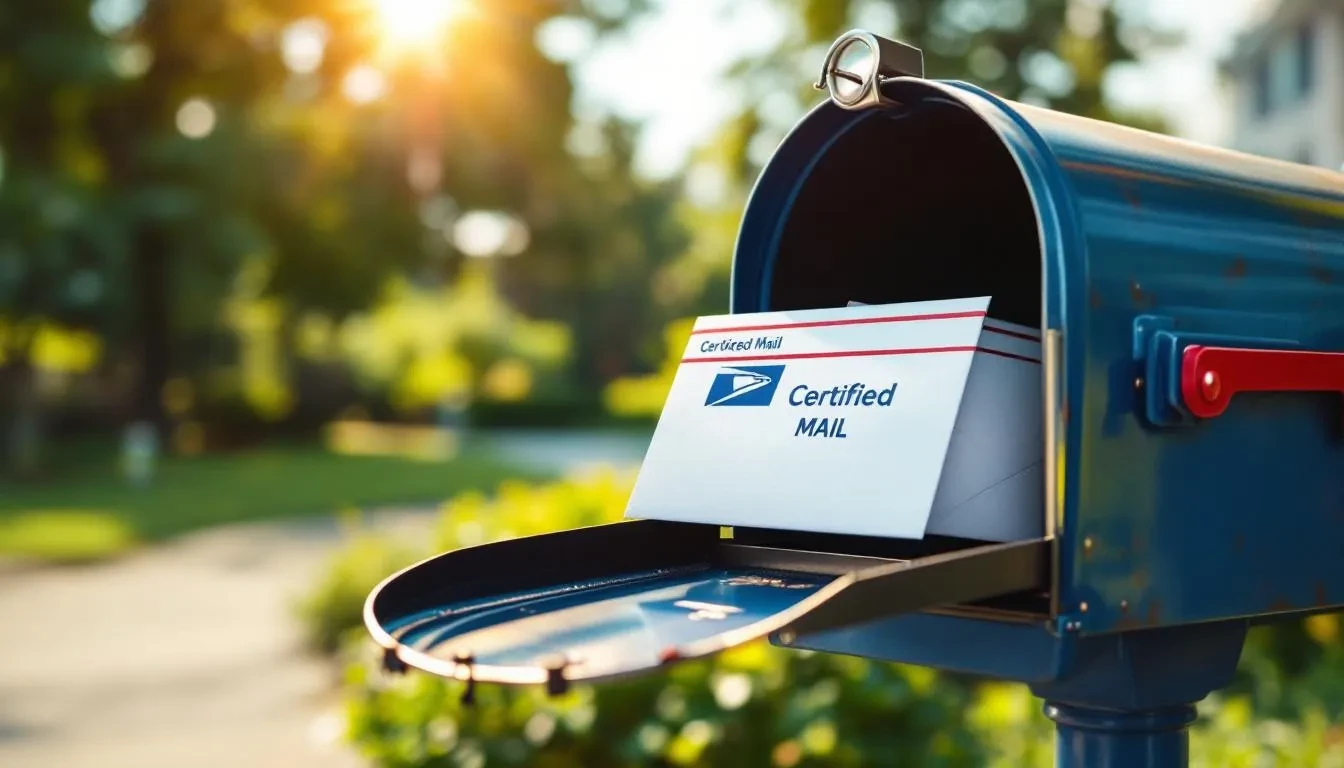
Certified mail through USPS gives you a signed, dated proof of delivery — which matters if the creditor later claims they never received your letter. For large creditors with formal executive office addresses, a physical letter sent via certified mail also signals that you’re serious and organized, which reinforces the credibility of your request. Many credit professionals recommend certified mail as the default delivery method for any formal correspondence with a creditor or the credit bureaus.
When Email Is Appropriate
Some creditors, particularly smaller credit unions and online lenders, are genuinely responsive over email. If you have a direct email address for a customer advocacy team or executive contact, email can actually be faster and get your letter in front of a human more reliably than a paper letter routed through a mail room. Always request a read receipt or follow up with a phone call within 5–7 business days to confirm receipt.
The safest approach: send via both methods when the stakes are high, such as when the late payment is significantly damaging your credit ahead of a mortgage application or major financial goal.
Follow-Up Strategy and Follow-Up Letter Template
Most people send one goodwill letter and wait. That’s a mistake. The follow-up process is where a meaningful portion of goodwill approvals actually happen — often because the first letter reached a front-line rep who rejected it without escalating, and a follow-up reaches someone with actual authority.
Timeline for the Goodwill Letter Process
- Day 1: Send your initial goodwill letter via certified mail and, if possible, email.
- Day 7–10: Call the creditor to confirm receipt. Keep a log of the date, time, representative name, and what was said.
- Day 14–21: If no response, send a brief, polite follow-up letter referencing your original letter and reiterating your request.
- Day 30: If denied, consider escalating to the CEO’s office or executive customer relations with a fresh letter — not the same one. Many consumers who have shared their experiences on forums like Reddit’s r/CRedit report that the second or third attempt, directed to a different person at a higher level, produced a different outcome than the initial rejection.
- Day 45–60: If approved, allow 30–45 days for the update to reflect on your credit report across all three bureaus.
Follow-Up Letter Template
[Your Name]
[Your Address]
[Account Number]
[Date][Creditor Name]
Attn: Customer Advocacy Office
[Address]To whom it may concern,
On [original send date], I mailed and emailed a goodwill adjustment request regarding a late payment on my account from [month/year]. I have not yet received a response and wanted to respectfully follow up.
I am not writing to dispute the accuracy of the late payment — I acknowledge it occurred. I am simply asking whether [Creditor Name] would be willing to make a one-time goodwill exception given my otherwise consistent payment history and the specific circumstances I described in my original letter.
I have enclosed a copy of my original letter for reference. I genuinely value my relationship with [Creditor Name] and am committed to maintaining the account in excellent standing going forward. I would be grateful for any consideration you are able to extend.
Sincerely,
[Your signature and printed name]
What Creditors vs. Credit Bureaus Can Actually Do
There is a persistent misconception that you should send your goodwill letter to the credit bureaus — Equifax, Experian, and TransUnion. This will not work. The credit bureaus do not have the authority to remove accurate, verified negative information from your credit report simply because you ask them to. Their job is to accurately reflect what creditors report to them. They can investigate a dispute if you believe something is inaccurate, but they cannot grant goodwill on behalf of a creditor.
Only the original creditor who furnished the negative information can instruct the bureau to remove it. When a creditor grants your goodwill request, they send an updated data file to the bureaus removing the late payment notation. The bureaus then process that update — typically within one to two billing cycles. This is why your goodwill letter must always go directly to the creditor, not the bureau.
If a creditor approves your request but the late payment remains on your credit report after 60 days, follow up with the creditor directly and request confirmation that they submitted the deletion instruction. You can also file a complaint with the CFPB at consumerfinance.gov/complaint if the creditor confirmed removal but failed to follow through.
Disclaimer: This article is for informational purposes only and does not constitute legal or financial advice. Goodwill letter outcomes vary by creditor, account history, and individual circumstances. No removal of accurate information from a credit report can be guaranteed. For personalized guidance, consider consulting a certified credit counselor or a licensed credit repair professional.
Sources: Consumer Financial Protection Bureau (consumerfinance.gov); Federal Trade Commission (consumer.ftc.gov); Fair Credit Reporting Act, 15 U.S.C. § 1681 et seq.
30 days is reasonable for a first letter. If you don’t hear back, try a different contact path rather than sending the same letter to the same place twice.
Can a credit repair company write goodwill letters for me?
Some will. The catch is that goodwill works best when it’s personal — a company form-letter is instantly recognizable to a creditor’s customer advocacy office. A letter in your own voice, with your own story, is usually more effective than anything written by a third party.
Does sending a goodwill letter hurt my credit?
No. Goodwill requests are informal. They don’t appear on your credit report, they don’t trigger disputes, and they don’t affect your score either way.
What if they say no?
Move on. You can still pursue a formal FCRA dispute if there’s any inaccuracy in how the item is being reported — see our Metro 2 compliance guide for when reporting errors are your actual leverage.
Need help building a full dispute + goodwill + negotiation strategy for your specific report? Book a free consultation and we’ll walk through it together.

Kevin Romero
Founder & CEO, Online Credit Repair
Kevin built Online Credit Repair after fixing his own credit — going from a 560 score to buying a home at a low interest rate and launching a 20-employee company. He knows firsthand how a better credit score unlocks real opportunities: homeownership, business credit lines, and financial freedom. Kevin and his team help clients exercise their rights under the FCRA and CROA to dispute inaccurate items and rebuild their credit the right way.
About Kevin & the team ·
Free consultation ·
@kevthecreditguy ·
Last reviewed: April 2026
Stop getting turned down. Start getting approved.
Get a free credit analysis from our Metro 2 specialists. No pressure, no obligation.
Book a free call Or call 1-800-455-9632