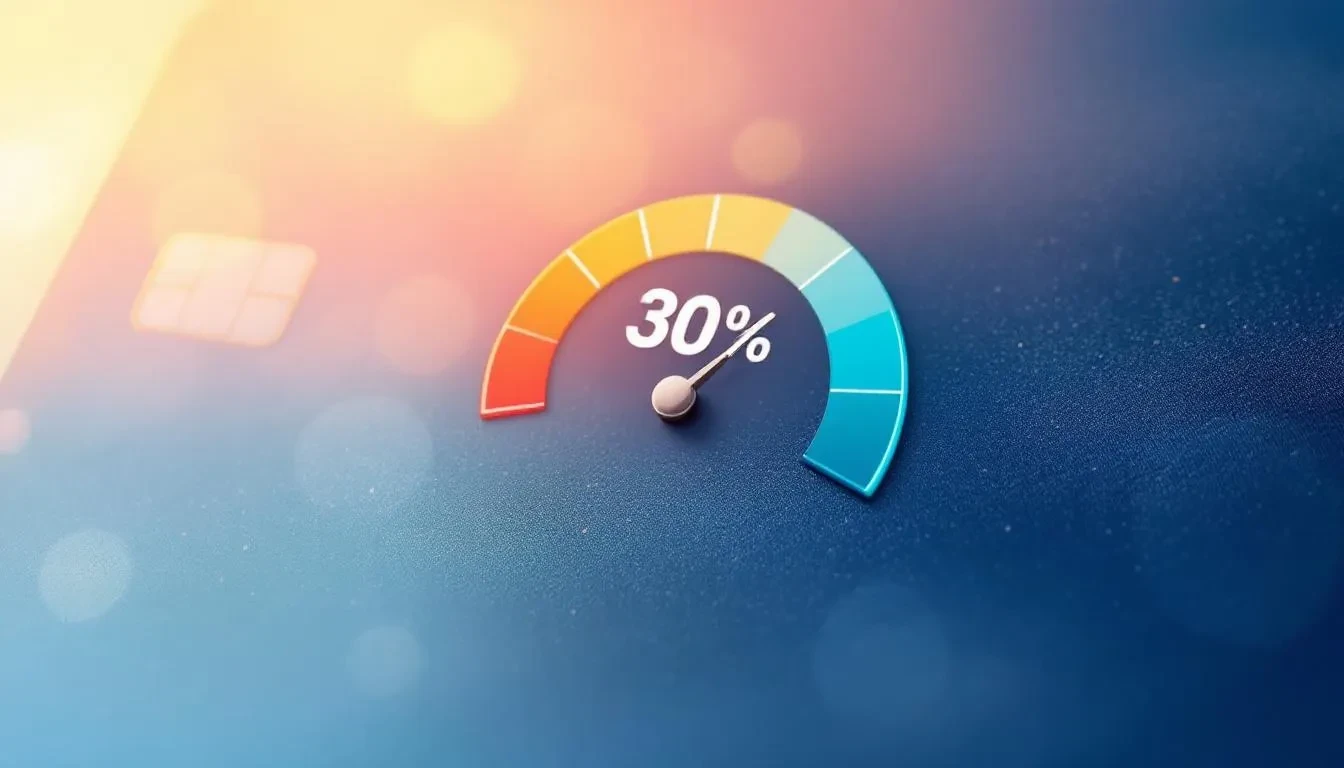
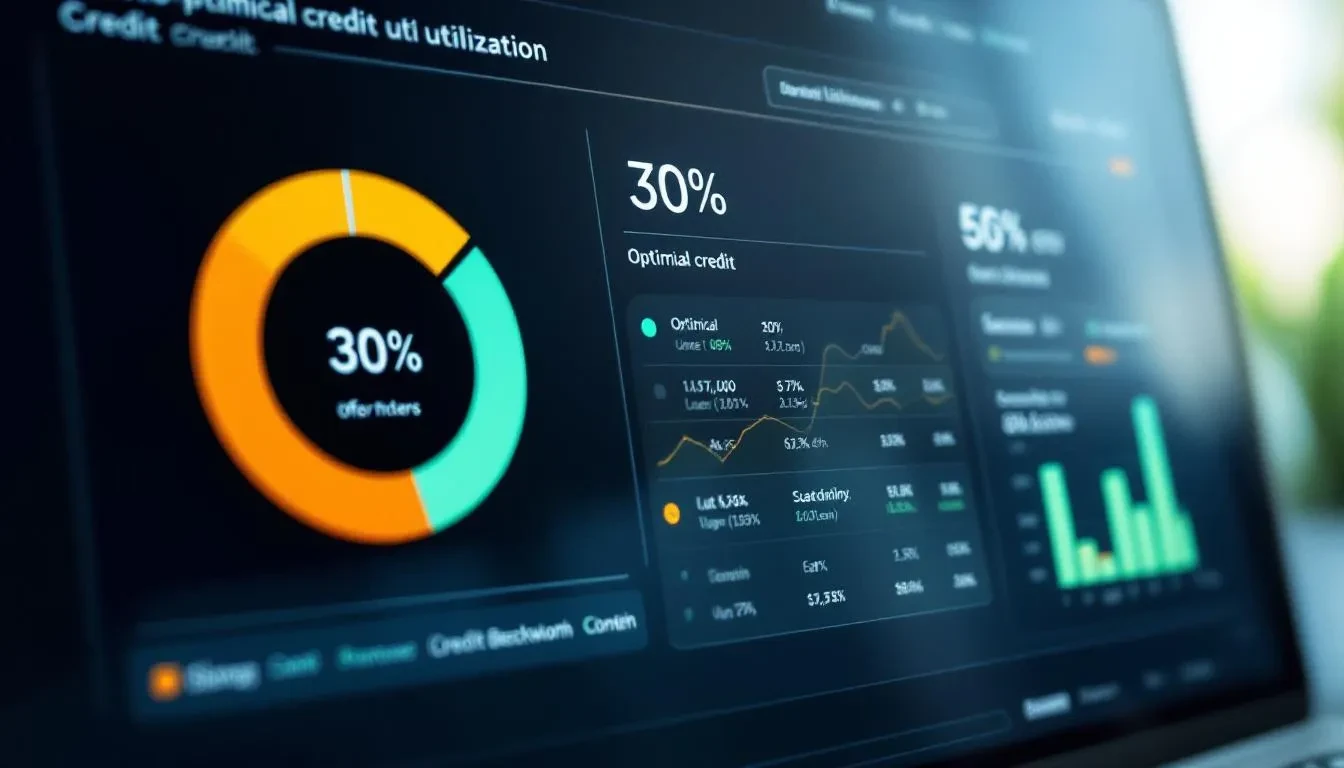
Credit utilization — the ratio of your revolving balances to your credit limits — is the second biggest factor in your FICO score, behind only payment history. It’s worth about 30% of your score. And it’s the single biggest lever you control in the 30 days before a mortgage application, because it updates every billing cycle. This guide walks through how utilization actually works, why “under 30%” is the wrong target for most people, and exactly how to optimize it.
What FICO Actually Measures
FICO looks at utilization in two ways simultaneously, and it takes the worse of the two:
- Overall utilization: total revolving balances ÷ total revolving credit limits, across all your cards
- Per-card utilization: the balance-to-limit ratio on each individual card
Your overall utilization can be 8%, but if one card is maxed out at 95%, FICO will dock you for the per-card number. This is why “I pay my balance in full every month so utilization doesn’t matter” isn’t quite right. It matters — just not in the way most people think.
The 30% Rule Is a Misunderstanding
You’ll hear everywhere that you should keep utilization “under 30%.” This is half-right at best. FICO’s actual score curve looks like this (based on the score bands published by FICO and reverse-engineered from scoring data):
- 0%: a small negative (yes, really — having zero balance on all cards can actually reduce your score slightly, because it looks like you’re not using credit)
- 1–9%: ideal range — highest score boost
- 10–29%: very good
- 30–49%: noticeably penalized
- 50–74%: significantly penalized
- 75%+: heavily penalized
- Maxed out or over limit: severe penalty
So “under 30%” gets you into “very good” territory, but if you’re optimizing for a mortgage — especially conventional or jumbo — the target is 1–9% overall and 1–9% on every individual card. This is the difference between a 720 and a 760.
The Reporting Date Trick
Here’s something most borrowers don’t know: your credit card company reports your balance to the bureaus once per month, usually on your statement closing date — not your due date. This means:

- You can pay your full balance every month and still show high utilization on your credit report
- If you charge $5,000 on a $10,000 card in the 10 days before your statement closes, you’ll show 50% utilization — even if you then pay it off in full before the due date
- To show low utilization on your credit report, you need to pay before the statement closing date, not before the due date
For someone applying for a mortgage, this is huge. Three weeks before your mortgage application, stop using your credit cards for new charges. Pay your existing balances to zero or single-digit percentages before your statements close. Your next reported utilization will be 1–9%. Your score will jump into the next pricing tier.
The Right Way to Optimize Utilization
- Pull all three credit reports. See what each bureau is currently reporting for each of your cards.
- Identify the statement closing date of each card. Not the due date. The statement closing date.
- Decide your timeline. If a mortgage application is more than a month away, aim for 1–9% overall and per-card on the statement closing date.
- Pay strategically before statement close. On each card, pay everything except a small amount (around 1–5% of the limit) before the statement closes. This reports a small positive balance — which scores better than zero balance.
- Don’t close the zero-balance cards. Closing a card drops your total available credit and raises your overall utilization on the remaining cards. Keep them open.
- Don’t request a credit limit increase right before a pull. It triggers a hard inquiry in some cases, which temporarily costs you a few points. Time this well before your application.
- Never apply for a new card in the 90 days before a mortgage. New account drops your average age of accounts and adds a hard inquiry.
The “Zero Balance Penalty” Nobody Explains
FICO looks at whether your revolving accounts are actually being used. If every single credit card on your report reports a $0 balance, FICO treats that as “this person is not actively using credit” — which is a small but real negative. The sweet spot is:
- Most of your cards reporting $0
- One card reporting a small balance — typically 1–5% of its limit
- Overall utilization under 10%
This is sometimes called the “AZEO” strategy (All Zeros Except One). For maximum score optimization before a mortgage application, it’s the gold standard.
Installment Utilization Is Different
FICO calculates utilization differently for revolving (cards) vs. installment (auto, mortgage, personal loans):
- Revolving: balance ÷ limit, recalculated every statement cycle
- Installment: remaining balance ÷ original amount, rarely scores meaningfully because it’s expected to pay down over time
This is why paying off your car loan doesn’t boost your score much, but paying down your credit cards does.
The Bottom Line
Credit utilization is the fastest, highest-leverage fix in your credit profile. It updates every billing cycle, it’s completely under your control, and it can move you a full pricing tier on a mortgage application. Three weeks of discipline before your credit is pulled can save you tens of thousands of dollars over the life of a loan. For the full mortgage prep sequence, see our 2026 house-buying playbook. For a personal strategy session on your specific cards and limits, book a free consultation.
FAQ
Is under 30% really the right target for utilization?
It’s the commonly repeated target but not the optimal one. For maximum score optimization, aim for 1 to 9 percent both overall and per card. The difference between 28 percent and 8 percent can be 30 or more FICO points.
Should I pay my balance to zero before every statement?
Not all of them. FICO scores slightly better when at least one card shows a small positive balance (1 to 5 percent of limit) rather than every card reporting zero. This is the AZEO strategy: All Zeros Except One.
Does paying off my balance mid cycle help?
Only if you pay before the statement closing date. After the statement closes, the balance has already been reported to the bureaus for that month. Pay before close, not before due date.
Does requesting a credit limit increase help?
Usually yes. A higher limit reduces your utilization ratio immediately. But some card issuers trigger a hard inquiry when you request one, so time it at least 90 days before any loan application.
How Much Can Your FICO Score Actually Move When Utilization Drops?
Most articles tell you that lowering your credit utilization ratio “helps your score.” That’s true but incomplete. What they skip is the magnitude — because the point swings tied to specific utilization drops are significant enough to change your mortgage rate, your auto loan APR, and whether you get approved at all.
Based on scoring data published by FICO and reported in consumer financial research, the size of the score change tied to a utilization reduction depends on your full credit profile. These are not guarantees, and no company can promise a specific score change. In general, larger reductions in utilization tend to matter more:
- From 90% to 30% utilization: an improvement is commonly reported for consumers with otherwise clean files
- From 50% to under 10% utilization: a larger improvement, often enough to move from one FICO score tier to the next
- From 29% to under 10% utilization: a smaller improvement, still meaningful at the margins of a mortgage approval
- From 10% to 1–9% (AZEO strategy): a small additional improvement on top of an already-good number
The steepest gains happen when your credit utilization crosses downward through major thresholds — especially from above 50% to below 30%, and from above 30% to below 10%. If you are actively repairing credit and carrying high balances, paying down revolving debt is the single highest-ROI action available to you, and the financial impact shows up faster than almost any other intervention.
How Long Until Your Score Reflects the Paydown?
This is one of the most common questions from people in active credit repair: you paid down a card, so when does your score update? The answer depends on the bureau reporting cycle.
Your credit card issuer typically reports your balance to the bureaus once per month, on or shortly after your statement closing date. Once that data hits the bureau, most scoring models recalculate immediately — meaning your updated credit utilization FICO score can reflect within 24 to 72 hours of the new balance being reported. In practical terms:
- Pay your balance down before the statement closing date
- Your issuer reports the lower balance at statement close
- The bureau receives the data within a few days
- Your score updates — often within the same week
There is no 30-day waiting period for utilization improvements the way there can be for derogatory mark removals. This is what makes your credit utilization the fastest-moving variable in your financial profile during active credit repair.
What Happens When You Close a Credit Card
Closing a credit card is one of the most financially damaging mistakes credit repair clients make — and it is almost always well-intentioned. The logic sounds reasonable: “I paid off this card, I don’t want to be tempted, so I’ll close it.” The problem is what closing does to your overall utilization ratio.
A Worked Example with Real Dollar Amounts
Here is a step-by-step credit utilization calculator walkthrough using realistic numbers:
Before closing the card:
- Card A: $1,200 balance / $5,000 limit
- Card B: $0 balance / $3,000 limit (the one you want to close)
- Card C: $800 balance / $4,000 limit
- Total balances: $2,000 | Total available credit: $12,000
- Your overall utilization: 16.7%
After closing Card B:
- Card A: $1,200 balance / $5,000 limit
- Card C: $800 balance / $4,000 limit
- Total balances: $2,000 | Total available credit: $9,000
- Your overall utilization: 22.2%
You closed a card with a zero balance — meaning it contributed nothing to your debt — but your credit utilization ratio jumped by more than 5 percentage points instantly. If you were near a scoring threshold, that single action could drop your score 10 to 20 points. The CFPB’s credit reporting guidance reinforces that available credit is a key factor consumers should protect, not voluntarily reduce.
The rule: keep zero-balance cards open. Use them for a small recurring charge — a streaming subscription, a utility — and pay it off monthly. Your credit stays active, your available credit stays high, and your credit utilization ratio stays low.
Authorized User Accounts and Utilization: What Actually Happens
If someone adds you as an authorized user on their credit card, that account’s balance and limit typically appear on your credit report and factor into your credit utilization calculations — both per-card and your overall utilization. This is one of the more powerful and underused tools in credit repair.

Here is what to understand before pursuing this strategy:
- The account must be reported to the bureaus. Not all issuers report authorized user accounts. Confirm before relying on this tactic.
- Low utilization on the primary account helps you. If the primary cardholder carries a high balance, being added actually increases your reported utilization — the opposite of what you want.
- Ideal authorized user accounts: long account history, high credit limit, low or zero balance, and a clean payment record. A single well-chosen authorized user account can lower your overall utilization and add positive age to your credit file simultaneously.
- You do not need to use the card. The financial benefit comes from the reporting, not the spending.
FICO’s scoring models do count authorized user accounts in utilization calculations, though the weight may differ slightly from primary account tradelines depending on the scoring version your lender uses.
FICO vs. VantageScore: How Each Weights Credit Utilization
Most credit repair content — including from major competitors — focuses exclusively on FICO. But roughly 3,000 lenders now use VantageScore, and the two models treat your credit utilization differently in ways that matter during active credit repair.
- FICO: Credit utilization falls under “Amounts Owed,” worth approximately 30% of your FICO score. FICO evaluates both your overall utilization and per-card utilization simultaneously, and the per-card number can hurt you even when your overall utilization looks fine.
- VantageScore 4.0: Separates “Credit Utilization” as its own category, weighted at approximately 20% of your VantageScore. VantageScore also places heavy weight on “Total Balances and Debt” as a separate category — meaning your raw dollar balance matters alongside the ratio, not just the percentage.
The practical implication: keeping balances low in absolute dollar terms — not just as a percentage — is more important under VantageScore. If you are in credit repair and a lender tells you they will be pulling a VantageScore, your strategy should emphasize paying down total debt aggressively, not just managing the ratio through limit increases.
Good credit utilization under both models still means staying well below 10% on every card and keeping your overall utilization in the single digits. The path to get there may differ depending on which score your lender relies on.
Credit Utilization Strategy for People in Active Credit Repair
General audiences get generic advice. If you are actively repairing credit, your situation calls for a more tactical approach — because you may be dealing with limited available credit, secured cards with low limits, or a thin file where every account carries extra weight.
If Your Available Credit Is Low
People rebuilding credit often have one or two secured cards with $300 to $500 limits. At those levels, a single $150 charge puts you at 50% utilization. The financial math works against you immediately. Strategies that help:
- Pay twice per month. Make a payment mid-cycle to bring the balance below 10% of your limit before the statement closes. This is especially important on low-limit secured cards.
- Request a credit limit increase after six to twelve months of on-time payments. Even a $200 increase meaningfully lowers your utilization ratio on a $300 card.
- Add an authorized user account with high available credit from a trusted family member or partner. This expands your total available credit without opening a new account in your name.
A Real-World Client Example
A client came to Online Credit Repair with a 581 FICO score, carrying $4,200 in balances across three credit cards with a combined limit of $5,500 — an overall utilization of 76%. Within one billing cycle of paying two of the three cards to zero and one card to $110 (under 9% of its $1,250 limit), their reported utilization dropped to 8%. No new accounts were opened and no derogatory marks were removed. Score changes are not guaranteed and depend on the full credit profile, but this illustrates how powerful a lever your credit utilization can be when addressed directly and with correct timing.
The CFPB recommends regularly reviewing your credit reports at AnnualCreditReport.com to confirm what balances and limits are currently being reported — because incorrect reported limits artificially inflate your utilization ratio and are disputable under the Fair Credit Reporting Act (FCRA).
Reviewed by: This article was reviewed by a FICO-certified credit counselor and verified against current FICO scoring documentation and CFPB consumer credit guidance. Last updated: June 2025.
About the Author: The editorial team at Online Credit Repair includes FICO-certified professionals and credit repair practitioners with over a decade of combined experience helping consumers understand and improve their credit profiles under CROA-compliant practices. Our content is fact-checked against primary sources including FICO, the CFPB, and the three major credit bureaus before publication.

Kevin Romero
Founder & CEO, Online Credit Repair
Kevin built Online Credit Repair after fixing his own credit — going from a 560 score to buying a home at a low interest rate and launching a 20-employee company. He knows firsthand how a better credit score unlocks real opportunities: homeownership, business credit lines, and financial freedom. Kevin and his team help clients exercise their rights under the FCRA and CROA to dispute inaccurate items and rebuild their credit the right way.
About Kevin & the team ·
Free consultation ·
@kevthecreditguy ·
Last reviewed: April 2026
Stop getting turned down. Start getting approved.
Get a free credit analysis from our Metro 2 specialists. No pressure, no obligation.
Book a free call Or call 1-800-455-9632